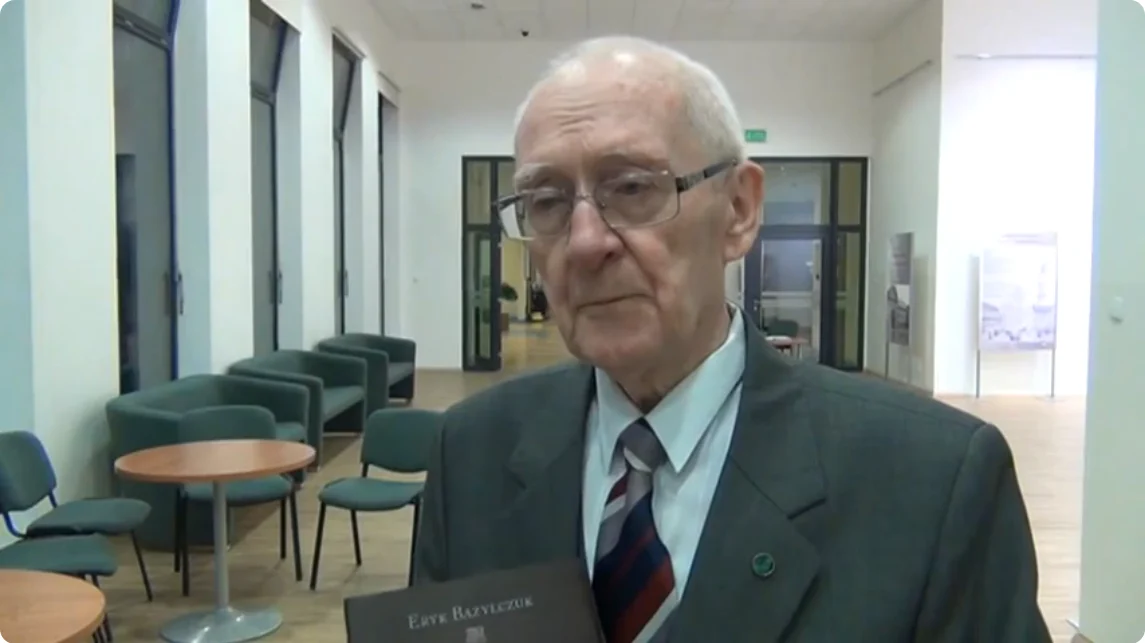
Today marks the anniversary of the beginning of the revolution in Budapest, which started with the students, and the culminating event took place at the monument of the Polish-Hungarian hero Józef Bem. The hero of this story became Eryk Bazylczuk from Bydgoszcz, who passed away ten years ago, remembered mainly as the first president of the Bydgoszcz Metropolis Association.
The Bem monument, located roughly on the opposite side of the Danube from the Hungarian Parliament, was not chosen by accident. The Hungarian students were inspired by the events of Poznań June, when the first major general strike occurred and was bloodily suppressed – The students and young Hungarian intelligentsia wanted to express solidarity with the Poles and demanded changes similar to those that took place in Poland a few days earlier, when Władysław Gomułka took power – says Professor Mitros Mitrovits, a Hungarian historian working at the UKW, speaking to us at Bem Square.
Although the Poznań events brought a brutal suppression of the protests, the authorities changed their rhetoric, and its new face became Władysław Gomułka. This made a strong impression on the Hungarians – In front of the monument they hung the Hungarian and Polish flags. Banners appeared at the demonstration reading “We stand with Poland,” along with the Polish coat of arms – Professor Mitrovits recounts the events at the Bem monument – There was one man from Bydgoszcz. Eryk Bazylczuk, who was a student here in Budapest, took part in the student rally on the eve of the revolution at the polytechnic auditorium, and then he joined the demonstration in this square. From there, the crowd marched to Kossuth Square, where the Hungarian Parliament is located. That is where Imre Nagy, the new Prime Minister of Hungary, appeared at the window.
Professor Mitrovits calls Prime Minister Nagy the “Hungarian Gomułka,” for he was to symbolize a similar political thaw to the rise of Gomułka in Poland, marking the end of the era of brutal Stalinism. But the Hungarians wanted even more — they began to demand the withdrawal of the Soviet Red Army from their territory. Moscow responded firmly, and after several days a bloody crackdown on the participants of the revolution began, while Nagy was executed in 1958.
“Bazylczuk was active until the end of the revolution. He served guard duty, defending public buildings with a submachine gun, and together with Polish students they reported daily to the embassy on what was happening in the streets of Budapest,” says Professor Mitrovits. On the last day of the revolution, Eryk Bazylczuk left Hungary by plane.
Bydgoszcz November
The events of 1956, which began in Poznań, also reached Bydgoszcz. Apart from the acts of solidarity with the Hungarians organized by the people of Bydgoszcz in October 1956, including blood donation campaigns, November saw the burning of a radio jamming station on Dąbrowski Hill. This uprising broke out spontaneously during a scuffle with the militia on Gdańska Street near one of the cinemas, but was accompanied by shouts of solidarity with the Hungarians.