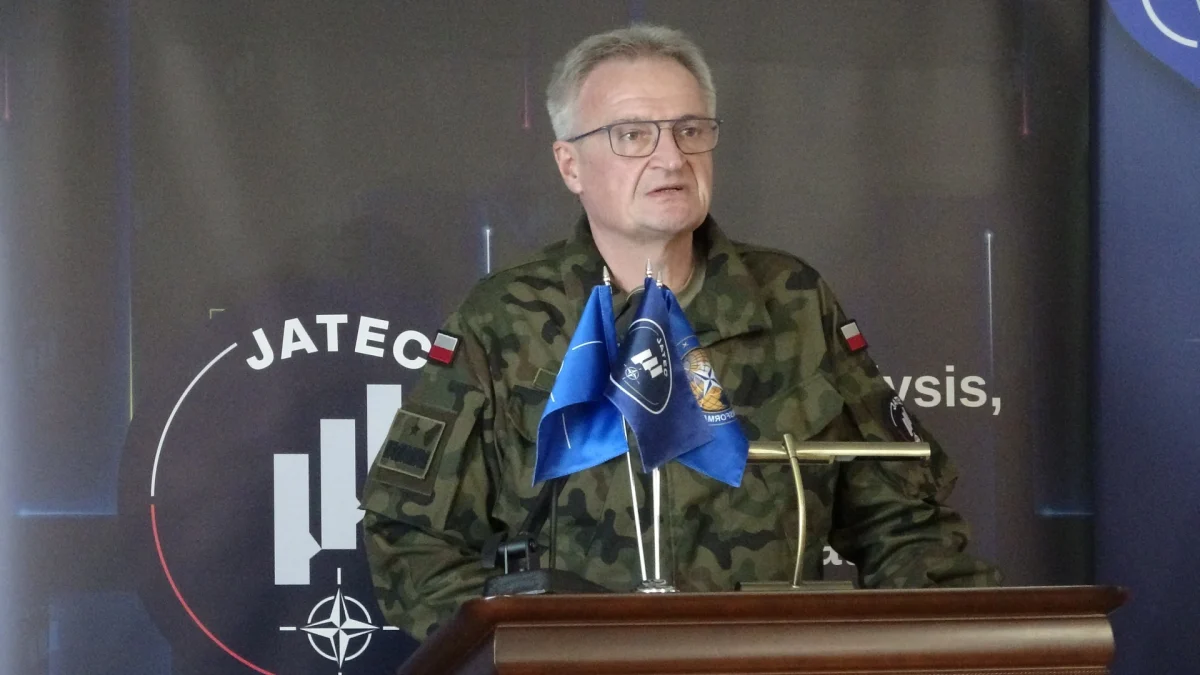
On Tuesday, exactly one year passed since the official opening of the NATO–Ukraine Joint Analysis, Training and Education Centre (JATEC), inaugurated in the presence of NATO’s Supreme Allied Commander Transformation, Adm. Pierre Vandier, and Ukraine’s Deputy Prime Minister Olha Stefanishyna. At the time, the message was clear: it was an important day for Ukraine, taking its first step toward NATO. In practice, however, it appears that the Alliance has become the greater beneficiary.
Our coverage of the opening (17 February 2025):

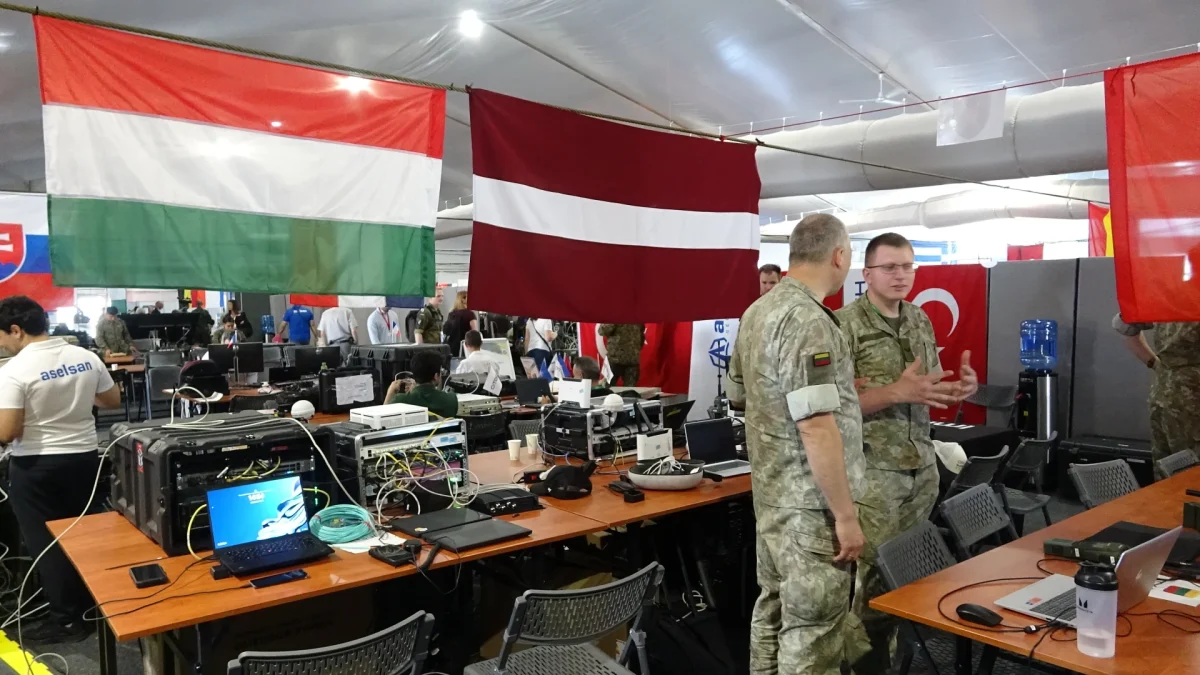
The creation of JATEC had two main objectives. On the one hand, it aimed to build cooperation between Ukrainian forces and NATO, developing the foundations for effective communication in the event of potential joint operations—more professionally referred to as interoperability. On the other hand, NATO seeks to continuously adapt its doctrine by drawing on Ukraine’s frontline experience. Having been at war for four years, Ukraine has gained valuable insights that NATO countries would find difficult to acquire through passive observation alone. Thanks to JATEC, NATO is learning how the rules of warfare are evolving as a result of this conflict, where, for example, drones now play a crucial role. Last autumn, the Swiss portal 20min.ch described JATEC in Bydgoszcz as the main hub for knowledge transfer between Ukraine and NATO.
In Bydgoszcz, relatively little is written about JATEC, despite the city’s significant role in strengthening transatlantic security. At Portal Kujawski, we strive to fill this gap by treating these issues as a priority. One of the more interesting initiatives launched under JATEC is the Innovation Challenge. It is a typical hackathon—a competition aimed at solving problems identified on the Ukrainian front. The first edition addressed the issue of guided aerial bombs of the GAB3 type used by Russian forces. Forty teams from NATO countries took part in the competition, which was won by the French company Alta Ares. The company proposed a solution called “Embedded Artificial Intelligence for Recognition, Detection, and Identification.” The use of artificial intelligence is intended to help quickly detect and counter GAB-based attacks.
The second edition focused on the problem of fiber-optic drones. In this area as well, solutions were developed in cooperation with innovators, and these are currently being implemented by NATO member states.