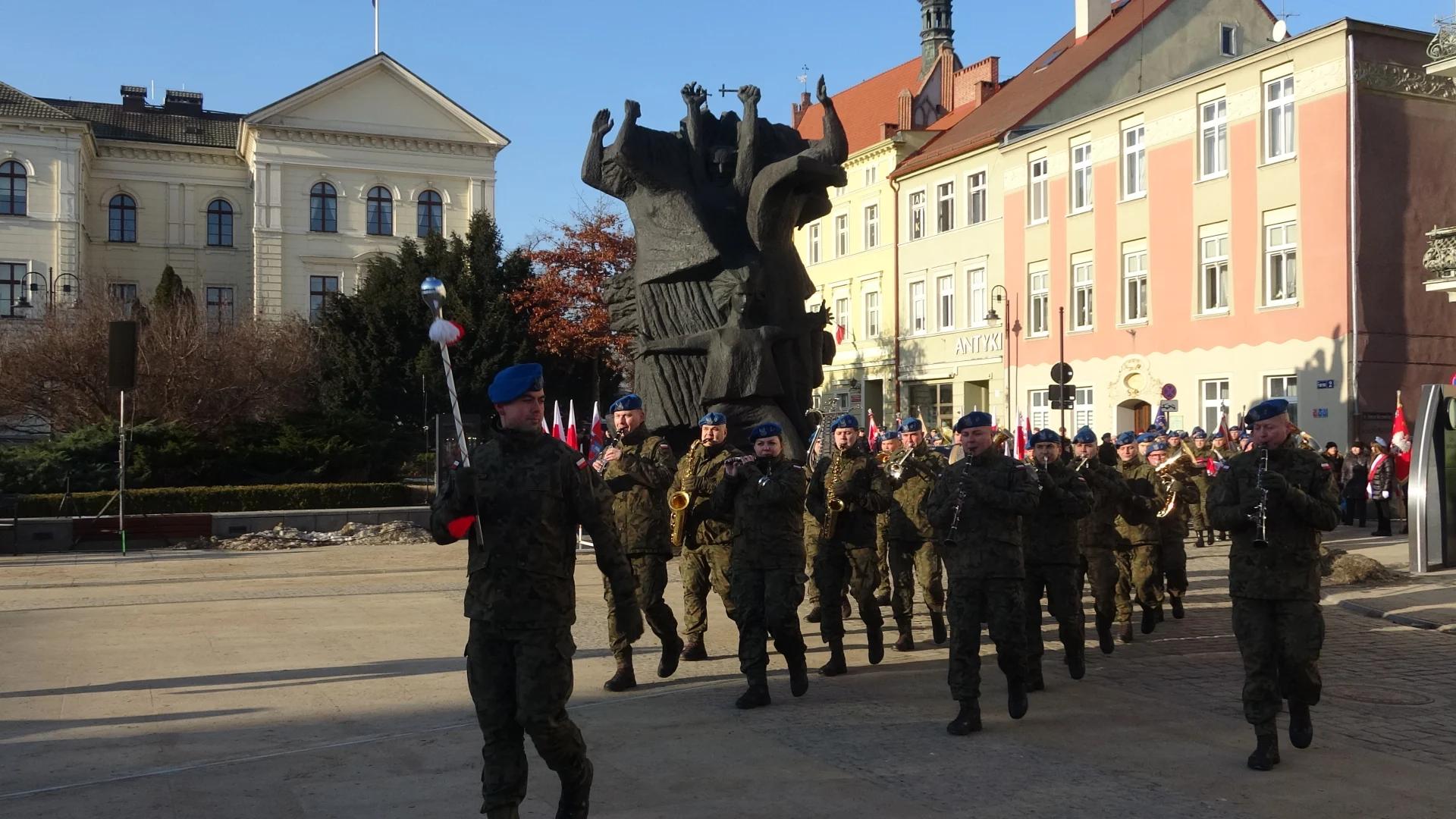
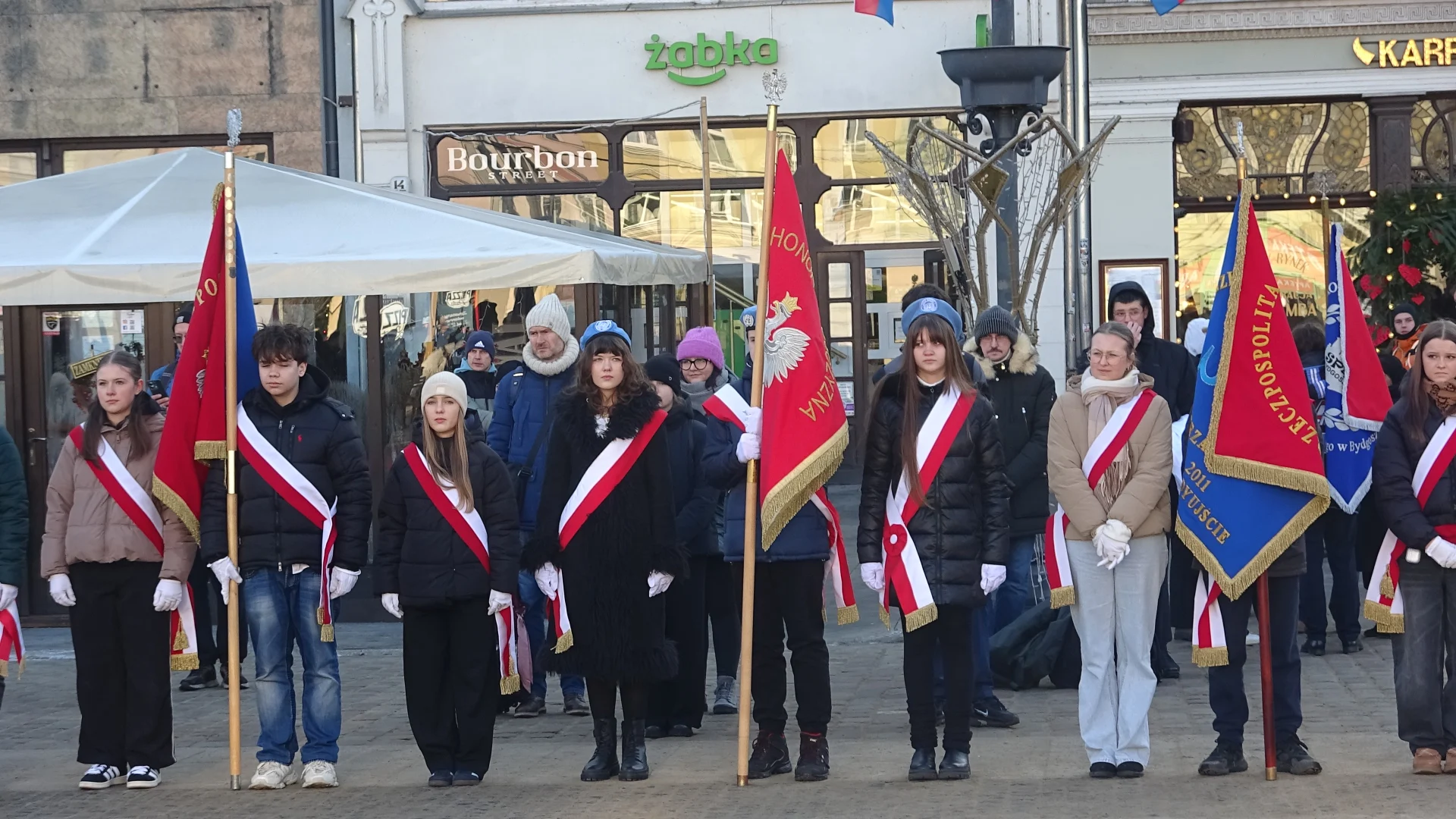
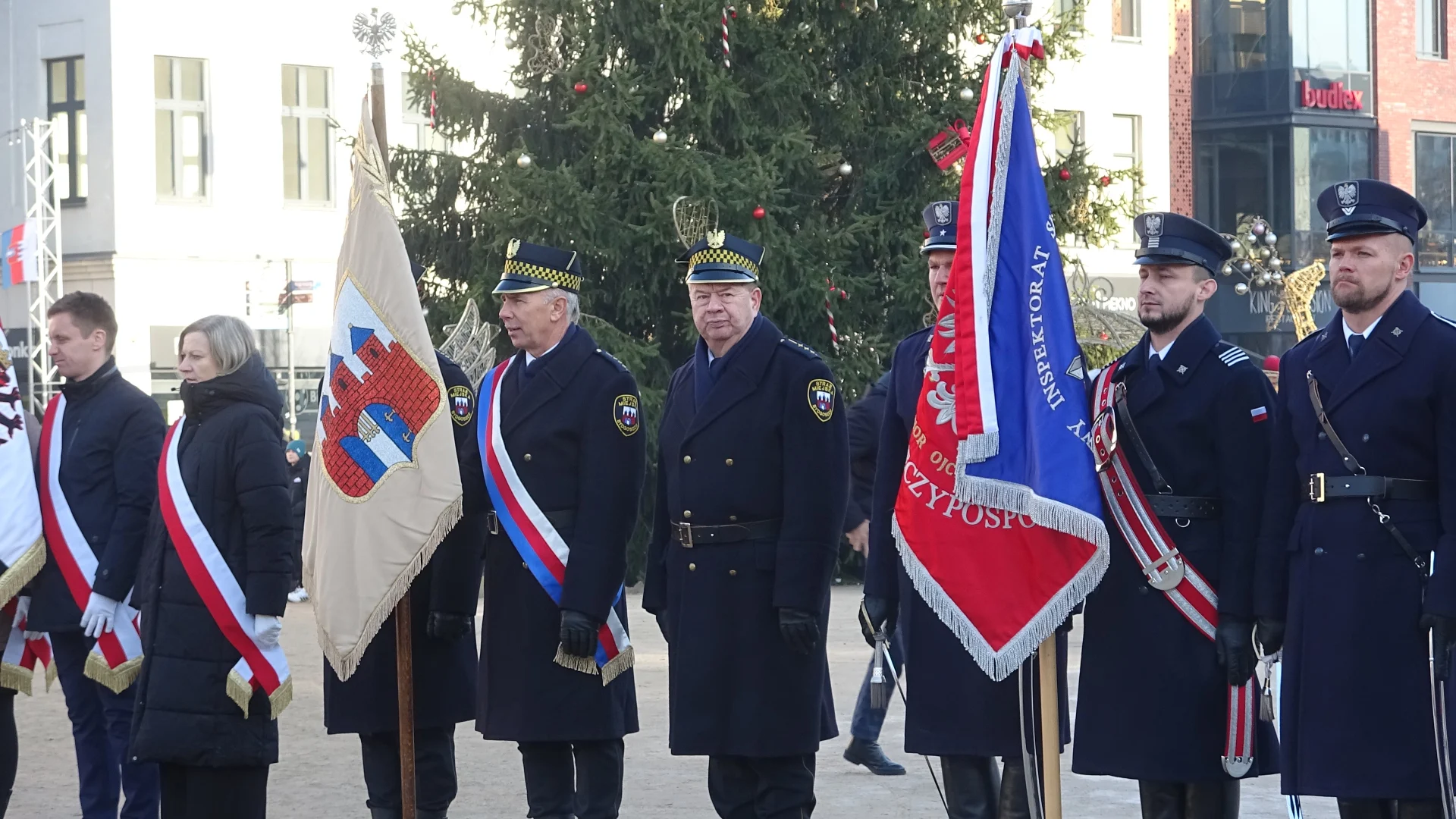
“Bydgoszcz returned to Poland not through a violent gesture, but through the order of restored justice,” said Deputy Voivode Piotr Hemmerling during the ceremonies marking the 106th anniversary of Bydgoszcz’s return to Poland. When Poland declared independence on 11 November 1918, Bydgoszcz, Pomerania, and Greater Poland were under German control, and the future of these lands was uncertain. For this reason, January 1920 plays a more important role in the history of Bydgoszcz.
The celebrations of the 106th anniversary of Bydgoszcz’s return to the Motherland began with a Holy Mass at the Bydgoszcz Cathedral, after which a Polish Army honor guard brought the standard onto the Old Market Square. This was the same place that, 106 years ago, witnessed great euphoria and the welcoming of the units of Colonel Bernard Śliwiński, who had distinguished themselves on the battlefields of the Greater Poland Uprising. Those moments are reconstructed in our film material using archival photographs enhanced with artificial intelligence.
“There are moments in history that do not need raised voices. They speak for themselves through time, through consequences, through endurance. Today’s anniversary is just such a moment,” emphasized Deputy Voivode Hemmerling, adding that Bydgoszcz’s return to Poland represented the “order of restored justice.” It should be remembered that from the 18th century, when Bydgoszcz was taken over by Prussia as part of the First Partition of Poland, generations of Polish residents of Bydgoszcz fought to preserve the Polish character of the city. This was not easy, as aggressive colonization policies meant that Poles became a minority. After 11 November 1918, when a socialist revolution was sweeping through Germany, Polish residents of Bydgoszcz organized themselves, took part in the Greater Poland District Parliament in December 1918, and at the end of that year the Greater Poland Uprising broke out, involving many people from Bydgoszcz. Subsequent events and the peace conference in Paris led to Bydgoszcz’s return to Poland in January 1920.
The later part of the ceremony included the solemn reading of the roll of the fallen, a honor volley, and the traditional laying of wreaths.
It is also worth recalling the date of 22 January, which is rarely mentioned in Bydgoszcz. On that day, the commander-in-chief of the Greater Poland Uprising, General Józef Dowbor-Muśnicki, and Minister Leon Janta-Połczyński arrived in the city. It was then that Bydgoszcz was formally incorporated into Poland.
Używamy informacji zapisanych za pomocą plików cookies w celu zapewnienia maksymalnej wygody w korzystaniu z naszego serwisu. Mogą też korzystać z nich współpracujące z nami firmy badawcze oraz reklamowe. Jeżeli wyrażasz zgodę na zapisywanie informacji zawartej w cookies kliknij na ,,Akceptuj wszystko". Jeśli nie wyrażasz zgody, ustawienia dotyczące plików cookies możesz zmienić w swojej przeglądarce.
Necessary cookies are absolutely essential for the website to function properly. These cookies ensure basic functionalities and security features of the website, anonymously.
Cookie
Duration
Description
cookielawinfo-checkbox-analytics
11 months
This cookie is set by GDPR Cookie Consent plugin. The cookie is used to store the user consent for the cookies in the category "Analytics".
cookielawinfo-checkbox-functional
11 months
The cookie is set by GDPR cookie consent to record the user consent for the cookies in the category "Functional".
cookielawinfo-checkbox-necessary
11 months
This cookie is set by GDPR Cookie Consent plugin. The cookies is used to store the user consent for the cookies in the category "Necessary".
cookielawinfo-checkbox-others
11 months
This cookie is set by GDPR Cookie Consent plugin. The cookie is used to store the user consent for the cookies in the category "Other.
cookielawinfo-checkbox-performance
11 months
This cookie is set by GDPR Cookie Consent plugin. The cookie is used to store the user consent for the cookies in the category "Performance".
viewed_cookie_policy
11 months
The cookie is set by the GDPR Cookie Consent plugin and is used to store whether or not user has consented to the use of cookies. It does not store any personal data.
Functional cookies help to perform certain functionalities like sharing the content of the website on social media platforms, collect feedbacks, and other third-party features.
Performance cookies are used to understand and analyze the key performance indexes of the website which helps in delivering a better user experience for the visitors.
Analytical cookies are used to understand how visitors interact with the website. These cookies help provide information on metrics the number of visitors, bounce rate, traffic source, etc.
Advertisement cookies are used to provide visitors with relevant ads and marketing campaigns. These cookies track visitors across websites and collect information to provide customized ads.