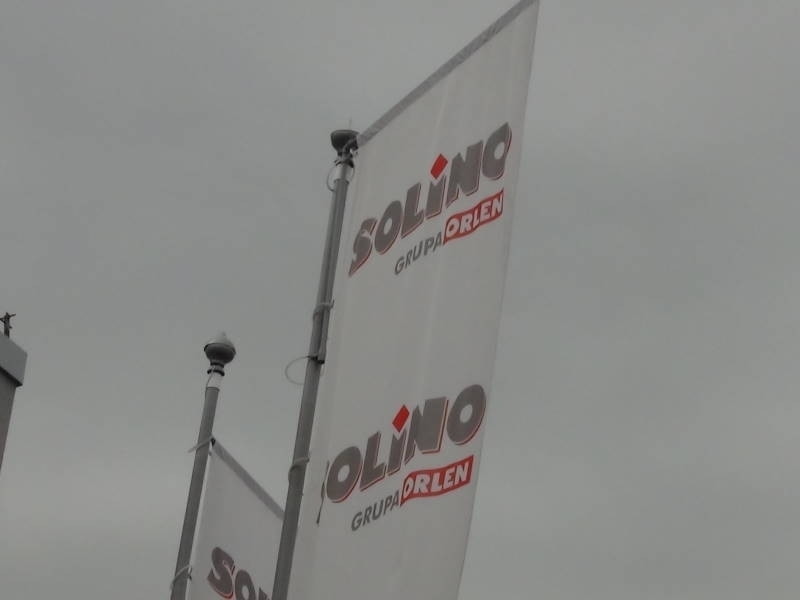
The hunger strike at the Inowrocław Salt Mines “Solino” has now entered its third week and is increasingly being used politically by PiS for current political purposes. Meanwhile, the government side has adopted a strategy of downplaying the significance of the protest and building a narrative that it lacks justification, as there are no plans for layoffs at IKS Solino. Until the hunger strike ends, the government does not intend to enter into talks, which will most likely result in the protest continuing through the holiday period.
Key facts:
– The demands of the Solidarność trade union largely overlap with the position of the Regional Social Dialogue Council of October 7, 2025, which can be treated as representing employers, trade unions, and local government;
– The main demand going beyond that position is the call for nationalization of Qemetica plants in Kujawy, including the currently dormant Janikosoda facility;
– On February 16, the Minister of Energy, responding to the Regional Assembly’s position of December 19, rejected key demands from the Regional Social Dialogue Council’s October 7 stance. This ministerial position is the main argument for the protesters;
– NSZZ Solidarność has for many months warned that failure to decide on launching new deposits could lead to the collapse of Solino within a decade or a dozen years;
– Preconditions set by both sides-the government demanding an end to the hunger strike and protesters demanding a government representative come to them0have prevented dialogue from starting, and there are currently no real prospects for it.
Some focus on the present, others on the future
The main axis of the dispute in the public debate is that, at present, there are no grounds to claim that IKS Solino may collapse or that layoffs may occur. This position is presented by the voivode and MPs from the Civic Coalition. NSZZ Solidarność, however, has for months argued that current deposits will be exhausted in a few years, and since launching new deposits – due to technological reasons – may take around 10 years, decisions made today will determine the future of the Inowrocław Salt Mines.

These arguments have convinced other trade unions, employers, and representatives of the regional government. Therefore, in position no. 2/2025, the Regional Social Dialogue Council calls for initiating the design of new salt extraction sites in Damasławek, Lubień Kujawski, and Łanięta, and after extraction ends, creating underground gas storage facilities in the caverns to secure Poland in times of geopolitical crises.
These proposals were also supported by the Regional Assembly in December. However, on February 16, Minister Miłosz Motyka indicated that there are no plans to launch new mines in Kujawy, as the region already has too high a density of underground storage compared to other parts of the country, making Lower Silesia a priority for the government. The minister also pointed to another issue: new mines would mean increased brine extraction, for which there is currently no demand in Kujawy. The decline in demand was influenced by the shutdown of Janikosoda’s operations in July.
The issue of brine customers and Qemetica
The striking trade unionists are calling for the nationalization of Qemetica’s Kujawy plants (formerly Ciech), which goes beyond the expectations of the Regional Social Dialogue Council. Solidarność consistently criticizes the 2014 sale of the Ciech group, arguing that Janikosoda, Soda Mątwy, and the IKS Solino mines form an interconnected system, and that selling the group deprived the state of influence over these facilities.
The Regional Social Dialogue Council, which had to seek compromise solutions, sees the issue differently. It sees an opportunity for Solino in the potential energy transition of Qemetica plants to biomass, which would require a stable supply of brine.
Although Minister Motyka expressed skepticism on behalf of the government about launching new mines for gas storage, he showed some enthusiasm for hydrogen technologies, with plans to build four caverns near Mogilno. However, the method of financing this project by Orlen remains unclear.
The issue cannot be reduced to current politics alone
The Council’s position from autumn shows that these are important issues for the economic future of Kujawy, a region struggling with higher unemployment in the province. Hence the strong interest from employer organizations such as Lewiatan. The government’s narrative that “IKS Solino does not plan layoffs” oversimplifies the problem and views it through the lens of a political term. The opposition’s framing is also not entirely consistent, as no key decisions for IKS Solino were made during the Law and Justice government, even though there were considerations such as transferring the company from Orlen to Gaz-System to integrate it with gas pipeline plans linked to the LNG terminal in Świnoujście. Orlen itself, even during the tenure of its socially active former CEO Daniel Obajtek, did not make crucial decisions.
Without dialogue-and with both sides entrenched in their positions-it will not be possible to move forward on this complex and important issue, particularly for Inowrocław.
Od 2009 roku związany z lokalnymi mediami. Specjalizuje się w tematach dotyczących infrastruktury, polityki regionalnej oraz funkcjonowaniu samorządów.