
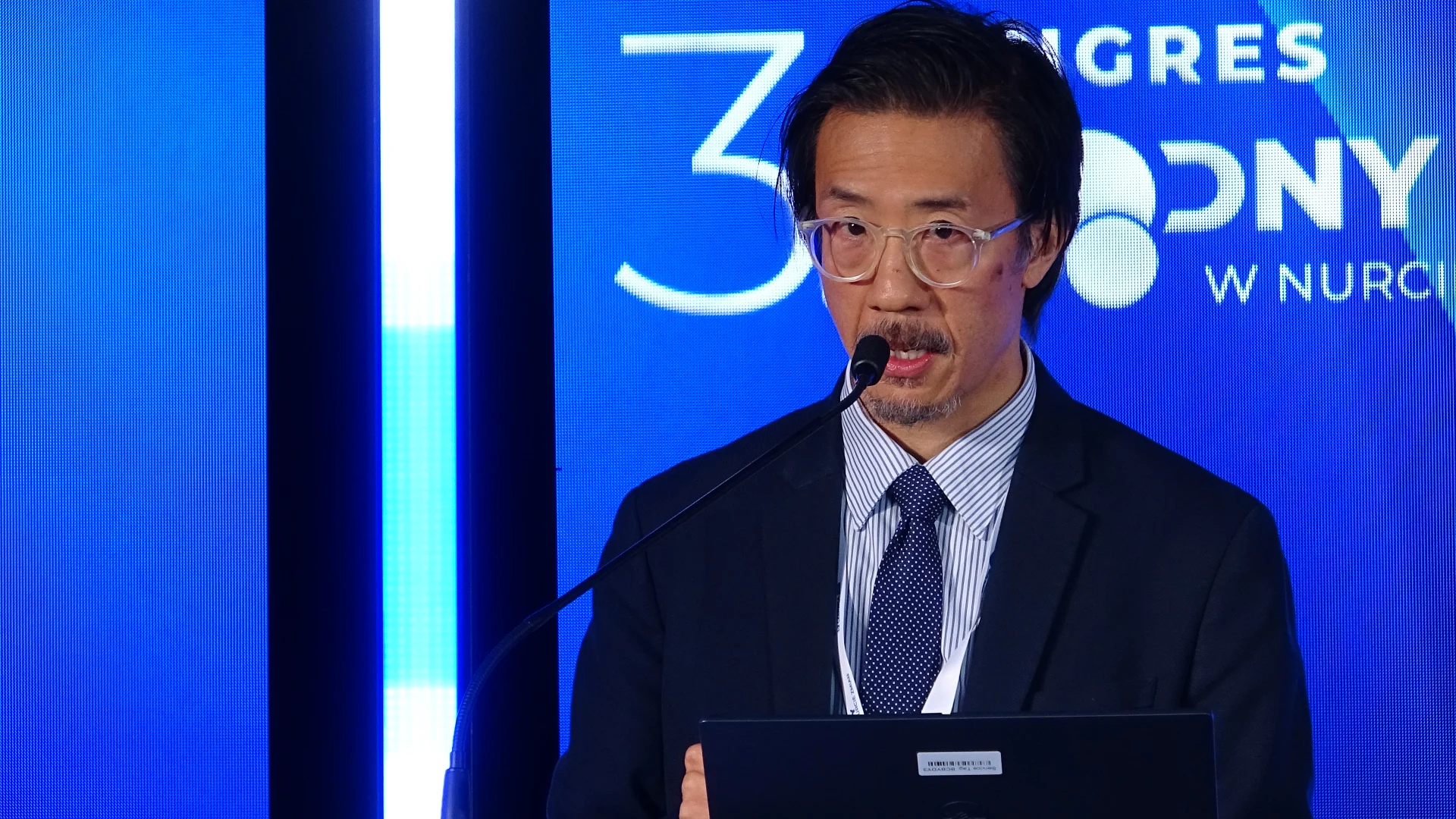
With this statement, Professor Paweł Rowiński assessed the future challenges Poland will face in the context of climate change. His presentation, together with that of Winston Yu, an analyst at the World Bank, provided the substantive opening of the 3rd Water Congress, which is being held in Bydgoszcz.
“Climate change primarily leads to an increase in extremes, namely floods and droughts. This is how we particularly experience climate change in our country, although the situation is similar in many other parts of the world,” said Professor Paweł Rowiński of the Polish Academy of Sciences during the opening lecture. “In Poland, what is especially significant is the growing frequency of days with extremely high air temperatures, while at the same time the number of extremely cold days is decreasing. Even without focusing on water-related aspects, it is worth remembering that temperature itself can be deadly. In 2024 alone, 63,000 people in Europe died as a result of heat stress and extremely high temperatures.”
According to Professor Rowiński, the most realistic scenario is one of increasing challenges:

“Due to climate change, we will increasingly face all water-related problems: water shortages, destructive excesses of water, as well as pollution. These issues go hand in hand with climate change. In short, we must be prepared for more frequent droughts, but also floods.”
Meanwhile, Winston Yu from China spoke about the global situation, noting that approximately 1.7 billion people work in the water sector worldwide, yet several billion people still lack basic water security.
“Today, we see that communities, cities, and even businesses are feeling the consequences of inadequate water security. We all know that public health, food production, and economic development suffer because of inefficient systems,” he said while promoting the World Bank’s Water Forward initiative.
“Within this initiative, Poland has valuable examples that it can share with other countries, demonstrating that nature-based solutions can be cost-effective methods of reducing risk while delivering benefits that extend well beyond protecting communities alone. Such approaches are not always easy to implement in Africa and Asia, because the costs of these measures—as well as their benefits—are not always easy to quantify.”
Od 2009 roku związany z lokalnymi mediami. Specjalizuje się w tematach dotyczących infrastruktury, polityki regionalnej oraz funkcjonowaniu samorządów.